A Revolutionary Approach to Modern American Railroading
By Joseph F. Hancock, Editor of Labor Today International
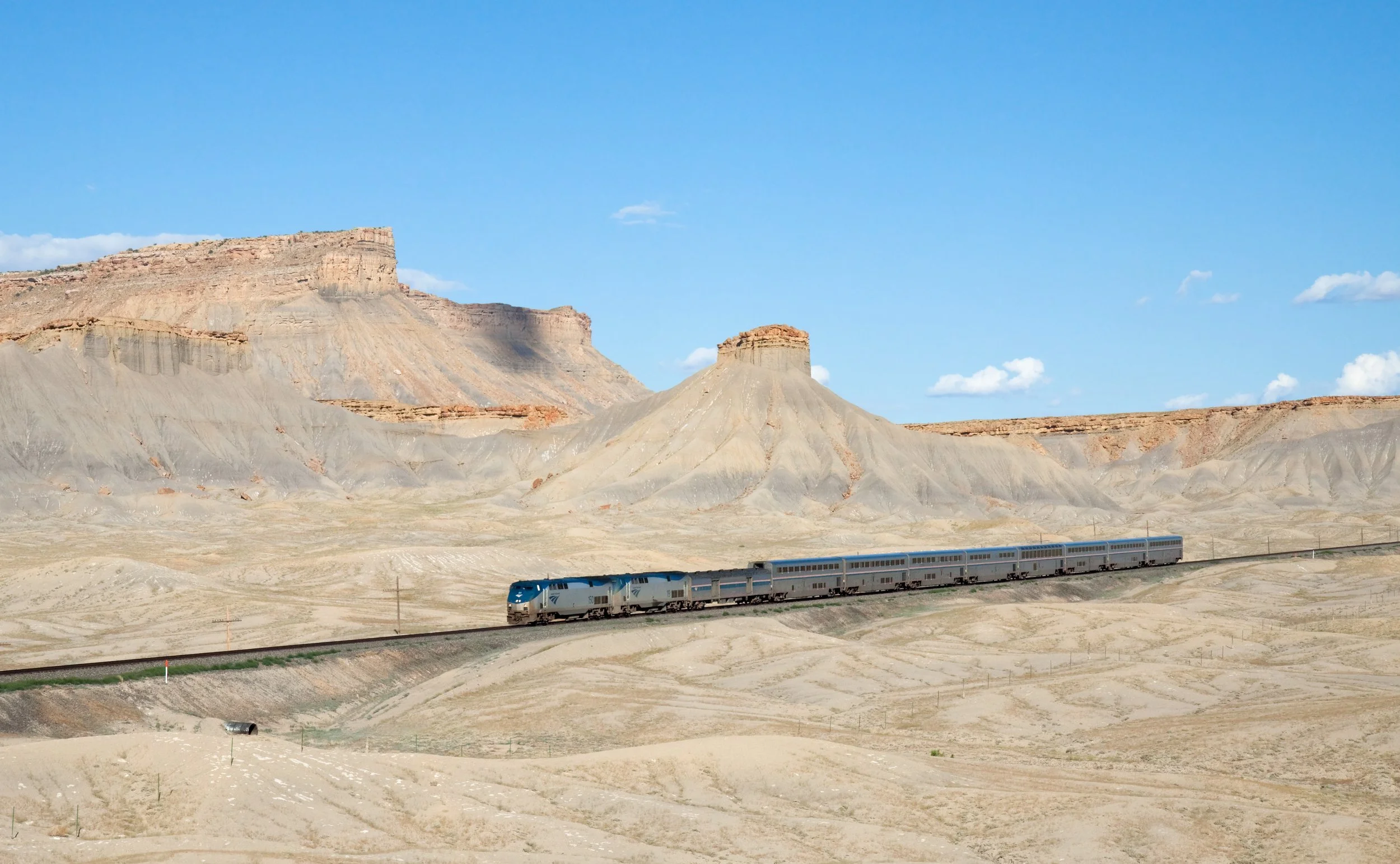
When I started writing this article I was focused on Amtrak and my recent trip to Northern California on the Pacific Coast Starlight. It was my first trip on Amtrak. The last time I took a train ride was when the private Class I railroads provided passenger services. I took a Santa Fe train to San Diego and back to Los Angeles.
Amtrak (formally the National Railroad Passenger Corporation) was created by Congress in 1970 and began operations on May 1, 1971, to save failing intercity passenger rail service in the U.S. It consolidated services from 20 private railroads into one network, initially serving 43 states, and established a national system that now connects over 500 destinations.
Now Amtrak’s equipment is fifty years old and Amtrak is only now beginning the procurement process to buy new rail cars. Amtrak operates mainly in the northeast corridor of the nation. On my trip on the Starlight, I noticed how old everything was.
The big Class I rail carriers own the tracks and the rights of way for the whole United States. With recent mergers there are now only 6 Class I carriers. Now Union Pacific is proposing a merger with Norfolk Southern railroad. This mega-merger represents yet another step in the concentration of production in the hands of a shrinking number of capitalists.. As it stands now, Amtrak must pay the private rail carriers to use the tracks.
There are several organizations that are actively organizing and advocating Public Rail Now. Part of their proposal is to retire the aging diesel locomotives and replace them with a new electric grid system of modern trains. In San Francisco on the peninsula, the State of California has built Cal Train, which is totally electric, while selling the old diesel locomotives to Perú. The locomotives should have been taken out of service as should all diesel.
Deregulation continues to be a major problem under our capitalist mode of production. Beginning with the Staggers Act (1980) regulations were slashed, giving railroads freedom to cut costs, abandon routes and hike prices. Shareholders are rewarded with returns over public safety. In March of this year Union Pacific railroad had 5 major derailments, for example.
March was not good for Union Pacific. In turn, Union Pacific was not good to highways and motorists, Amtrak train riders, nor to local communities along the tracks. The railway workers’ reform group, Railroad Workers United, documented five major derailments in March alone - one each in Texas, Kansas, and Nevada, and two in California, one in the north of the state and one in the south. In a few cases, highways were shut down, while in at least two others, Amtrak trains were forced to turn back, unable to obtain clearance through the wreckage.
The mishaps outlined below are a summary dating from March 1st to March 27th. In the space of just 27 days, Union Pacific wrecked five trains in five separate incidents, putting more than 100 rail cars on the ground, many of them and their contents completely destroyed. Thankfully, no one was injured or killed in any of these derailments. A Norfolk Southern train derailment in East Palestine, Ohio caused tremendous damage to the local community when several chemical cars containing vinal chloride exploded, spiling chemicals into the air and water. The reason for the derailment was that the train was too long. The length of the trains is the cause of most of the derailments. So, yes, the demand for shorter trains is a must.
All this comes as Union Pacific - the nation's largest Class One rail carrier - attempts to make the case that it should be allowed to absorb the nation's fourth largest railroad (Norfolk Southern) to become a mega-rail corporation of the size and power that the Robber Barons of the 19th century could only dream of. With this sort of safety record in just 27 days of March, is it really a good idea to give them even more power to run roughshod over workers, passengers, shippers, and communities? We say, HELL NO!
I encourage all revolutionary forces to make transport and in particular rail, a point of concentration for your organizations. A simple program of action and implementation is necessary. Begin by opposing the UP—NS merger proposal. The people should own the tracks, railbeds and rights of way. We must end the practice known as Precision Scheduled Railroading, which maximizes profits by reducing maintenance, cutting safety inspections, and overworking crews, leading to dangerous conditions on the tracks. We need to continue the fight for a national law or standard that requires 2-person train crews. As revolutionaries, we should be working with the rail advocacy organizations that are fighting for Public Rail Now. We need fewer trucks on the road and more trains! This is a very popular demand.
The capitalist answer to the crisis is to operate trains without train crews! This is where the class struggle is being fought out in transport (transportation). The transportation and distribution sectors are the keys to the capitalist economic system. That is why in 2022 President Biden signed a law prohibiting railroad workers from striking. The state always aligns itself with the employers. Unions and workers in rail have very few rights. This must change and revolutionaries need to bring their revolutionary spirit and organizing skills, concentrating on transport, to this campaign.
ORGANIZING RESOURCES: