Kroger Keeps All the Reward, Gives Workers All the Risk
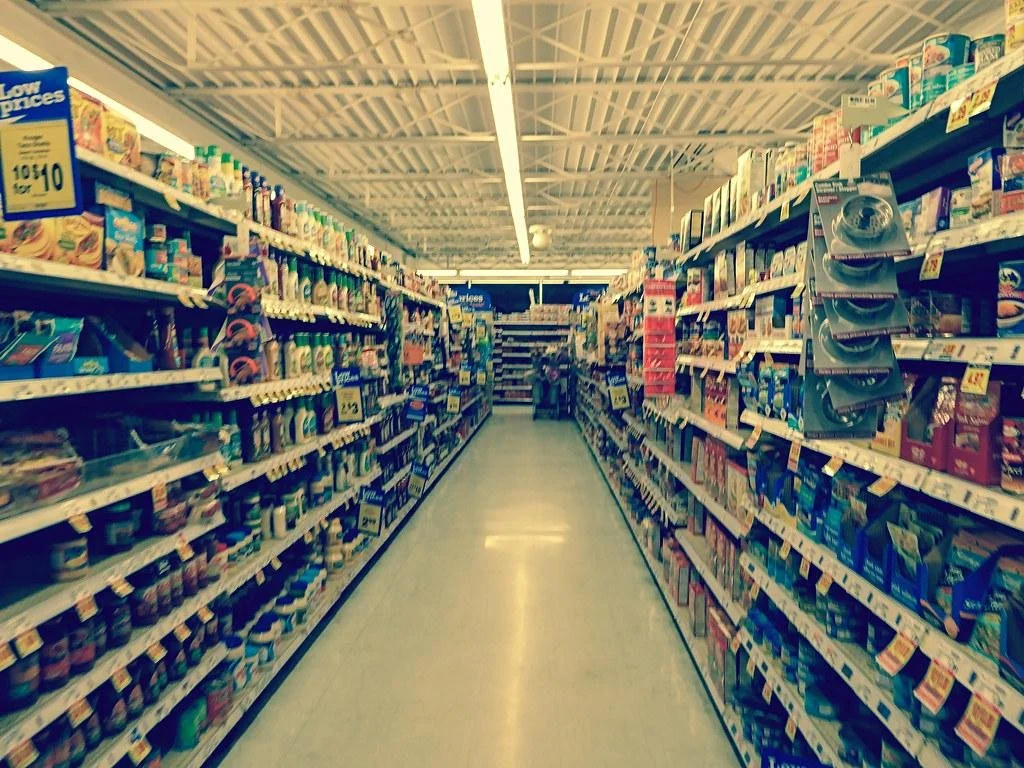
On November 17th, everyone across the entire delivery division of Kroger received an email “inviting” workers to a mandatory video conference. Some workers were set to meet at 8:00, others at 8:30. The ones assigned to the 8:30 meeting were informed that everyone else was losing their jobs at the end of January. By the end of January, 31st, 9 warehouses (6 spokes and 3 central hives) employing approximately 1500 people will close down. (1) The reason the company discussed was allegedly based on performance, that these warehouses were “underperforming,” with no further elaboration and no comfort to the workers who have since been thrust into a crumbling job market. What’s happened over the last year? What’s Kroger’s strategic trajectory? What does this mean for the continued exploitation of the workers?
Special Delivery
With the Kroger-Albertsons merger falling through, Kroger’s long term plans, and bizarre strategy, for its delivery division can be ascertained. Firstly, Kroger likely placed a lot of its long term expansion westward on the now failed merger. Albertsons covers a much wider area of the Western half of the U.S. than Kroger, as well as an impenetrable wall into the northeastern corner and an anomalous presence in the Chicago area. This presence in Chicago and the northeast created more competitive areas that would’ve made the foundation of the delivery division more capital intensive and almost certainly led to the shuttering of warehouses in these areas. This leads to the absolutely baffling decision to base a large delivery operation in Florida, where Publix has acted as a barrier of entry into the state for Kroger. It can only be assumed that Kroger believed its delivery pursuits would allow it to have a “presence” whilst bypassing the need for store infrastructure in the immediate term, allowing it to enter the market virtually unopposed. In practice, however, it appears that, just because you’re delivering your groceries, doesn’t mean the $60 billion grocery monopoly won’t pose a threat in its home field.
In our first article on Kroger, (2) we stated that Kroger isn’t competing with other grocery chains, and it’s important to understand that this is true only insofar as its main competitors are superstore monopolies. However, that isn’t true in general, as there are many other grocery chains, even if Kroger is without question the largest. But these chains are all well established. While they are competing with each other, the barrier to entry has dramatically increased in cost in their relative corners of the market. Kroger’s strategy has resulted in a strong presence in states like Ohio, Kentucky, Indiana, etc.. Here, Kroger’s delivery division is stable and profitable. This is not to say that other warehouses were not profitable, although we can’t know without hard data that isn’t public, but rather that these operations were more capital intensive than they were willing to commit to after a failed merger.
We had previously stated that Kroger’s delivery service doesn’t necessarily mark the end of its stores, but paves the way for the shuttering of smaller stores and the opening of larger, more efficient stores that can accommodate varying degrees of higher volume orders and/or higher income brackets. So far, this prediction seems to hold. Kroger also announced an expansion of its partnership with Instacart and other third party delivery apps. This sector saw a meteoric rise during the pandemic and has since continued to balloon internationally. (3) This allows the company a less capital-intensive intermediary to its delivery division for those orders within a close proximity of its stores, doubling as pseudo-warehouses for curbside orders to be picked before open and carry more inventory for third party delivery services. Meanwhile, the larger delivery division remains more effective at orders that fall outside a 30 minute delivery range, delivering to rural areas and even “food deserts” in cities that Kroger in many cases is responsible for creating. Thus, we must view the shuttering of these warehouses as part of a larger strategy to maximize profit at the expense of the worker, increasing the rate of exploitation where possible.
And the Krogers Are Made of Marble…
Kroger’s failure to acquire Albertson’s was a major setback, but it’s not the company that is hurting. While the fallout from the merger and the shuttering of the warehouses represent a notable loss, the company continues to post record profits. In fact, it announced $2 billion in stock buybacks, in addition to the $7.5 billion announced last year, a month after it was laying off 1,500 workers! (4) It offered $2500 in severance pay to any workers who stayed through until the end of January, and an additional $2500 for anyone willing to relocate to other warehouses with the condition that they are bound to the position for two years, or else repay the additional sum. This absolutely disgusting strategy shows the bare face of capital, where it leverages the growing reserve army to force workers to choose to maybe find comparable employment, or become bonded to this employer for 2 years and risk financial ruin in a new city. Meanwhile, the capitalists are absolutely drowning in cash off the backs of these same workers.
The idea that the capitalist takes all the risk is outright fallacious propaganda. The truth: it is the working class that takes on the risk of failure for any capitalist endeavor. The Kroger delivery workers have faced massive anti-union campaigns, workplace terrorism designed to instill fear in the worker, to make them inert. The workers must accept that this will only leave them more vulnerable. They mustn’t allow capital to decide their fate on its terms, but struggle against their own class’ exploitation.
Coolidge, Alexander. “Kroger Cuts Back Delivery Hubs as It Retools E-Commerce.” The Enquirer, Cincinnati Enquirer, 18 Nov. 2025, www.cincinnati.com/story/money/2025/11/18/kroger-is-closing-delivery-hubs-other-chan ges-in-home-delivery-business/87334322007/. Accessed 24 Feb. 2026.
Reed, Jane. “The Kroger-Albertsons Merger: Good for Business, Bad for Workers.” New Worker, 23 Mar. 2024, newworker.us/domestic/the-kroger-albertsons-merger-good-for-business-bad-for-workers. Accessed 22 Mar. 2026.
“Online Food Delivery - Worldwide | Statista Market Forecast.” Statista, 2026, www.statista.com/outlook/emo/online-food-delivery/worldwide?srsltid=AfmBOoqhRs_P ioq-9wJ--WrjiyYuFmkgrZcK5KURrgf0UGI__cA2WdVw. Accessed 24 Feb. 2026.
“Kroger’s Board of Directors Approves Additional $2.0 Billion Share Repurchase Authorization.” Kroger.com, 2023, ir.kroger.com/news/news-details/2025/Krogers-Board-of-Directors-Approves-Additional2-0-Billion-Share-Repurchase-Authorization/default.aspx.