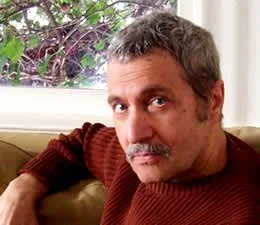
We republish the following tribute from El Machete, the organ of the Communist Party of Mexico, honoring the life of Michael Parenti, who passed away on January 25 at the age of 92. For many who have found their way into the communist movement, the work of Michael Parenti has been a guiding light. Through his speeches, books, and articles, he served as a consistent and powerful voice against U.S. imperialism and the propaganda that seeks to justify it. The editors of New Worker extend our heartfelt condolences to the Parenti family. His unwavering commitment and lifelong struggles will be long remembered within the class-oriented labor and communist forces in the US.
We are not born Marxists. We come to the theory perhaps through life's twists and turns, or under the influence of a professor, a group of friends, or a particular book. The latter was my case. Blackshirts & Reds, or Fascists and Reds in a rough translation, was the book that led me to decide to become a Marxist, to study further, and to prepare myself to join Lenin's Party. Its author, Michael Parenti, passed away on January 25th at the age of 92.
Born on September 30, 1933, into a working-class immigrant family in New York City, Parenti had to interrupt his studies after high school to work. He later earned his doctorate in political science from Yale and began a teaching career that was cut short when he was arrested for protesting the Vietnam War. Unlike other "left-wing" intellectuals, such as Noam Chomsky, Parenti's political commitments and consistent activism closed doors for him, forcing him to rely on writing and lecturing to make a living.
In his books, Parenti questioned and attacked American imperialism, liberal democracies, and the role of the media. His consistent stance led him to become an enemy even of his former friend Bernie Sanders, another idol of the American “left,” when NATO bombed Yugoslavia. It is in Fascists and Reds, however, that he hits the nail on the head: he attacks both imperialism and links it directly to European fascism of the 1920s and 30s, as well as left-wing anti-communism—that position which seeks to connect with the people to build socialism (or to create a “more humane” capitalism) without addressing class issues. In the process, he debunks many of the myths surrounding 20th-century socialist experiments, particularly those of the Soviet Union. The book is written in simple and clear language, yet it is rigorous, rich in historical sources, and offers solid analysis. It's not for nothing that it's described online as "a book that turns young people into communists in about an hour."
His talks also feature concise, understated language, yet with strong arguments and political content. In these times when the world seems to lack consistent intellectuals, we would do well to pay attention to both the form and substance of Michael Parenti's work. Rest in peace.