
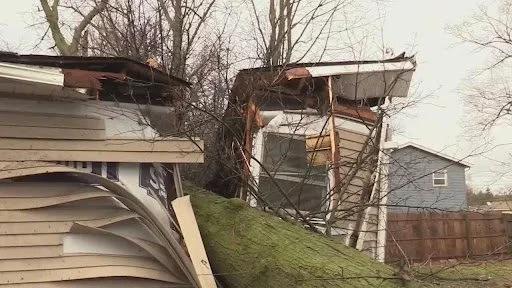
Image Source: https://wgntv.com/northwest-indiana/demotte-indiana-storm-damage/
The powerful derecho that struck Northwest Indiana on August 11, 2026, has continued to affect workers long after the storm passed. Wind gusts reached 99 mph, knocking down trees and power lines and leaving a massive portion of the region without electricity. More than 338,000 NIPSCO customers were affected by outages between August 11 to 16 and as of August 22, about 33,000 people still remained without power.
The prolonged outage has become a major issue for working families. Employees have had to deal with damaged homes and trees, difficult commutes, childcare problems, spoiled food, lack of air conditioning, difficulty charging phones and limited phone services.
At U.S. Steel's Gary Works. Just two days after the storm, the company reportedly notified employees that storm-related absences could still be handled under its attendance policy and could result in disciplinary action. Workers were told to make arrangements to report for their scheduled shifts.
The storm is occurring at an especially difficult time for workers at BP Whiting refinery, which have been locked out since March. To understand how the storm has affected workers who are already facing a prolonged lockout, we spoke with a BP Whiting employee about their experience during the storm and its aftermath.
Question: Were there any warnings before the storm? Were those warnings effective?
BP Worker: There were warnings, but we were all watching the radar. By the time our phones alerted us, the storm was already on us. The warnings were not as effective as they should have been.
Question: How did the storm affect you and your household?
BP Worker: I was without power for 10 days, and it took me 7 hours just to get to my driveway. Luckily, my house wasn’t damaged, but dozens of trees were ripped out of the ground, including 150-year-old oak and black walnut trees. AT&T was also out, so I had no way to get information or contact people. They launched a satellite program, but it only worked sometimes. For 8–9 days, I was lucky if a text came through.
Question: Have local, state, or federal governments done anything to help after the storm?
BP Worker: Portage Mayor Austin set up a command center. Schools delivered lunches, and shelters were provided for people to sleep or charge their phones. The state and federal governments probably could have done more. They declared a natural disaster, but no one came to save us. We saved ourselves.
Question: Has BP contacted you or provided any information or assistance to locked-out employees affected by the storm? Have there been any updates on the lockout?
BP Worker: No. No calls, emails, letters, nothing. Everything regarding the lockout is on hold. There was so much destruction across multiple counties, with people losing homes and suffering severe property damage. There have been no updates since the last time they met.
Question: Do you know other coworkers or friends who were affected by the storm?
BP Worker: Several coworkers’ homes were damaged, including trees falling on their roofs. My union brothers and sisters have been coming together to help however we can. On day 4 or 5, I felt defeated, and then I got a text saying people were on their way to help. I had almost 20 people in my yard cutting trees. They were all there helping out, hourly union workers, elected board representatives, financial officers. Everyone came together, they are also on lockout. Before that they went to help other people as well.
Question: U.S. Steel threatened disciplinary action against workers who continued to take time off due to storm damage. What do you think about that?
BP Worker: It is absolutely horrible. No one should be penalized for making sure their homes and families are safe after this amount of damage. I understand that the business has to run 24/7, but that is the company’s responsibility. They should not be relying on skeleton crews.
Question: If BP were not on lockout, what do you think would have happened to the workers?
BP Worker: We would 100% have been ordered to come in and would have gotten in trouble if we didn’t. It would have been the same message as U.S. Steel: the refinery has to run 24/7, and we need a certain number of people there. Hourly workers are expected to show up, while salaried workers can work from home. They have done that in the past, and they would have done it during this storm.
Question: NIPSCO, the monopoly gas and electricity provider in your area, has been raising energy costs. In 2024, the company said the increases would help upgrade infrastructure and improve safety and reliability. Do you believe those upgrades were made? How have the higher costs affected you?
BP Worker: I don’t think the upgrades were ever made. In the past 38 years, my power was only out twice. But in the past two years, I’ve had to use my generator three times this year alone and twice last year. I don’t know what they did, but we are now seeing power outages that we never used to have. There are a lot of tall oak, cherry, and black walnut trees in my area, and NIPSCO doesn’t trim the vegetation around the power lines. The storms have also been getting stronger.
I have a very small house, and I paid $900 for electricity in one month, compared with $250–300 during a really bad month in the past. I feel the increase even more because I’m locked out. I have to carefully watch where every dollar is going and make the money I’ve saved last as long as possible in this fight.
BP workers are not only suffering from the prolonged lockout and the storm, they are now also afraid of losing their health insurance as the lockout approaches six months. BP hired Chris DellaFranco, who was part of ExxonMobil management during the Beaumont, Texas lockout, where the company ultimately weakened the contract and the union’s position. Workers are now concerned that if BP uses the same tactics, they could soon lose their insurance as well.
Even in a time of crisis, companies and employers continue to prioritize their operations and profits over the needs of workers. Workers were left to deal with damaged homes, prolonged power outages, and financial hardship on their own to fend for themselves.
It’s their profits or our lives!
Check out ways to support BP workers at https://supportoilworkers.com/ or visit their picket lines and union hall!