When A “Communist” Party Runs Candidates…
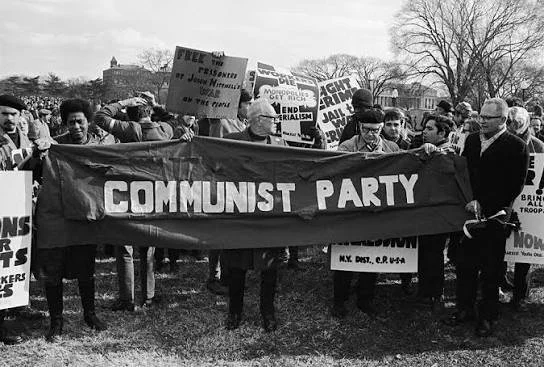
The “Communist” Party USA has been indicating interest in running its own candidates as a party once more. While there have been some attempts in past years, 2025 saw a much more explicit and coordinated effort to do so. Our criticism of the Communist Party of the USA (CPUSA) has been extensive as is, but this round of candidates allows us to contrast how a party that has abandoned revolution participates in electoral politics, and how our own organization should seek to when feasible. What did these campaigns look like? What were their platforms? What banner did they run under? What was the goal of these campaigns?
Hannah Shvets’ campaign is worth noting as one of the most glaring examples of the CPUSA’s failures to actually assert itself as an independent political vehicle. While the platform and messaging doesn’t stand out from any of the other candidates, the most glaring issues come from (1) their dual affiliations with the Democratic Socialists of America (DSA) and the CPUSA, and (2) Hannah running on the Democratic Party ticket. What are workers supposed to take away from this? How are we supposed to have an independent political vehicle of the working class when our supposed representatives are participating on behalf of a bourgeois party whose very interests are in contradiction with those of the workers? In fact, if it weren’t for the People’s World article declaring their affiliations with the CPUSA, it would be difficult to ascertain Shvets is even a member, considering there’s no trace of the party on the candidate’s website, unlike her DSA affiliations. Whatever involvement she has with the CPUSA, it’s clear that it doesn’t involve working to build a revolution, but rather getting intimately familiar with bourgeois offerings.
Next, let’s consider the other three candidates listed: Daniel Carson, Luke Rotello, and Colton Baldus. Since these campaigns share several common themes, we will explore them collectively. Once again, unless you were privy to the activity of these individuals, their party affiliations remained hidden. This only further highlights that the CPUSA correctly recognizes that it is more of a hindrance to building working class political power and should stay in the corner. Now their members can train as the next wave of DSA members and Democratic Party officials, steeled in the practice of disappointing anyone who might actually believe they stand for something. Perhaps the strategy was that if CPUSA removed as many traces of revolutionary zeal as possible, they would win endorsements from trade unions such as the United Food and Commercial Workers International Union (UFCW) and the United Auto Workers (UAW) - both of which continue to suppress militancy. This does seem to reflect the CPUSA’s calls for the “broadest coalition possible,” which clearly means coalition with the Democratic Party and reactionary union leadership and not the masses of workers. Their platforms all discuss reforms for improved public transportation, environmental protection, better housing, but hardly stand out as anything different from some Democrats, and make absolutely no mention of preparing for revolution. All of this only to still lose two of these elections. The CPUSA’s strategy is drawn in the name of “fighting fascism,” and yet it’s done nothing to prepare for such a fight.
Finally, we can try to salvage something usable from this information. The CPUSA believes in building broad coalitions in the name of “anti-fascism.” To accomplish this, it has both watered down its program to make itself more palatable and has opted to run its members (in what is clearly a flexible term,) as independents or even Democrats. It’s even been willing to allow campaigns to run to keep party affiliations completely covert. The CPUSA electoral strategy is focused on winning a campaign to push reforms. They present a “communist” as nothing more than your typical liberal progressive, but we can approach this as an incredible learning experience by asking, “what should a communist party do in bourgeois elections?
Firstly, understanding the workers need an independent political vehicle, it must be just that; independent. Its first priority isn’t to make sure its program appeals to trade union leadership, the petty bourgeoisie, or any other segment of society at the expense of the interests and leadership of the proletariat. Secondly, it must agitate against the dictatorship of the bourgeoisie at every turn, emphasizing the need for its destruction, and the dictatorship of the proletariat [workers] erected on its ashes. It must make clear that the differences between the Democrats and Republicans are ultimately superficial as they operate at the service of capital, that only socialism resolves this, and that there is no democratic path. Lastly, it must do these things, regardless of the electoral outcome, to aid in preparing the working class for the political struggle, as a conduit for organizing work to and build momentum from the areas of work of the workplace cells and local committees, into the political arena.
The CWPUSA doesn’t reject participating in elections on principle, (except in regards to voting in lieu communist candidate,) but correctly recognizes the context in which it must participate. When the CWPUSA achieves its goal of becoming a party, it will do precisely what a communist organization should do. It will take its revolutionary program and use it as a torch to expose the bourgeois parties. It will test its ability to mobilize its forces and its connections to the working class. It will practice in organizing campaigns and even develop techniques in governance in those instances we win elections. Most importantly, it will prepare the workers to seize political power on their terms, and have a fighting organization ready to build a state in the interest of the working class, until the international proletariat comes out victorious and the dream of communism is realized.
Our goal in elections, as an organization building a political vehicle for the organized working class, is precisely to test said organization of the working class. If we shroud or water down our messaging or our objectives to come off more palatable, we would be left with no true idea of what meaningful connections we have to the working class or their level of consciousness, regardless of if we win or lose an election.
Our future candidates’ platforms should be reflective of a revolutionary program. We should seek not simply to pass reforms, but to use these elected offices to agitate why socialism is necessary. But most importantly, a revolutionary party needs to be front and center. Any strategy that places the preparation of the working class for revolution aside is a strategy that we must criticize, and that is precisely the difference reflected when a truly Communist party runs candidates.