THE US–IRAN WAR: A KEY ELEMENT OF YANKEE PLANS IN THE INTER-IMPERIALIST STRUGGLE
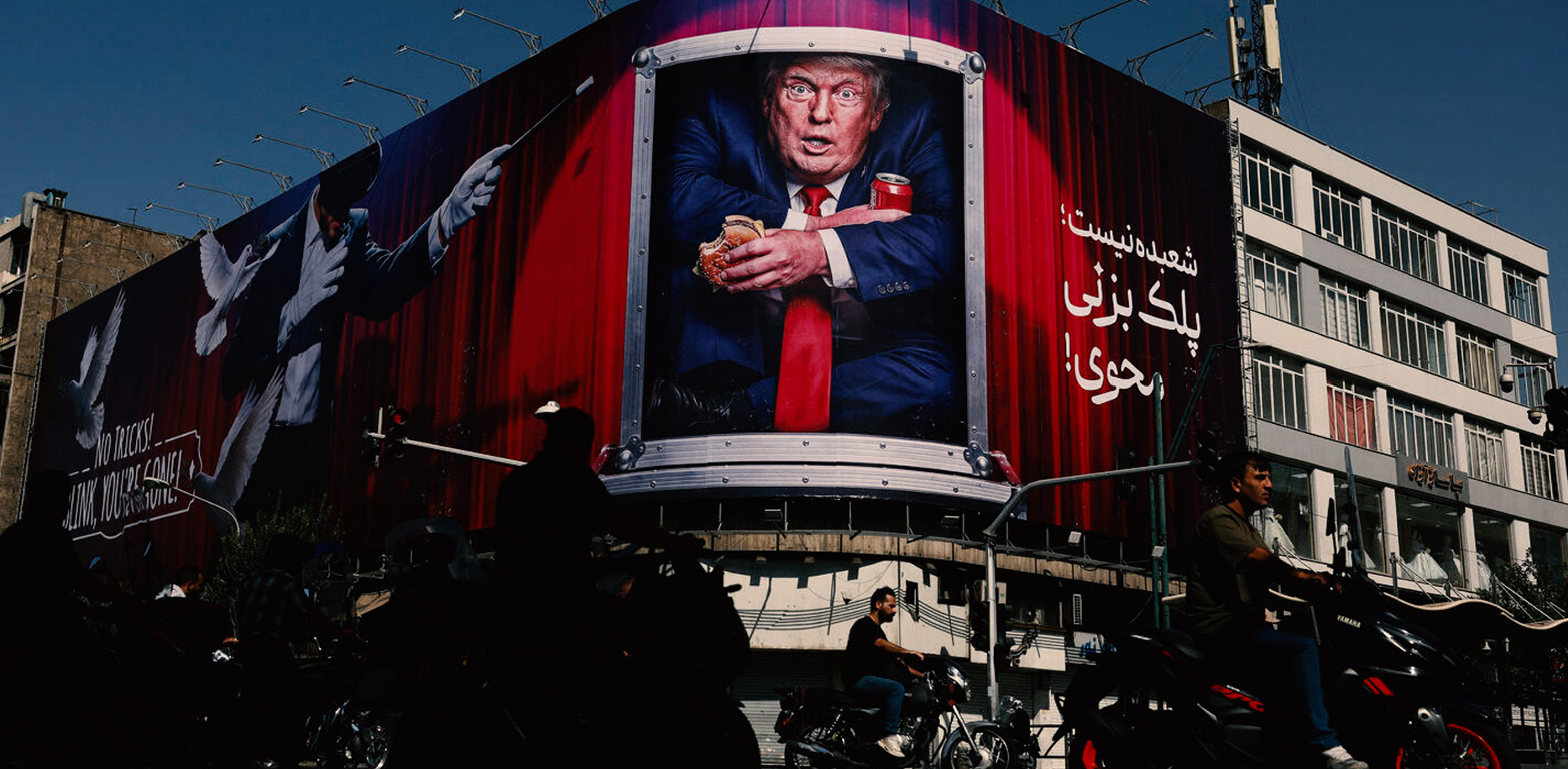
We are witnessing the greatest escalation of warfare of this century, led by the United States and Donald Trump. In the context of a war on a global scale involving imperialist powers confronting one another, we have a duty to deepen our critical analysis and expose a key fact: this international armed conflict is not driven by a religious, cultural, or values-based struggle, but by specific economic interests.
To understand those interests, it is necessary to reconstruct, in broad terms, the development of the war. The turning point was the United States’ abandonment of the Joint Comprehensive Plan of Action (JCPOA) in 2018, a decision that gave way to a policy of “maximum pressure” against Iran based on economic sanctions, diplomatic isolation, and the strengthening of alliances with Israel and the Gulf monarchies. This strategy aimed to weaken Iran’s economic and military capacity, limit its influence over regional actors such as Hezbollah, Hamas, and the Houthis in Yemen, and consolidate a balance of forces favorable to US interests in the Middle East.
However, rather than stabilizing the region, the policy of permanent pressure deepened existing tensions and accelerated the military escalation. From that point onward, the conflict began to shift from the diplomatic and economic sphere toward indirect military confrontation.
In an initial stage, this escalation took the form of covert operations, targeted attacks, and acts of sabotage against strategic infrastructure, both within Iranian territory and in areas of influence controlled by its regional allies. At the same time, fighting intensified in Syria, Iraq, and Yemen, where actors aligned with Iran, the United States, and Israel contested control over strategic areas.
Over time, these episodes ceased to be isolated incidents and became a sustained sequence of retaliations. Israel increased attacks against positions linked to Iran’s Islamic Revolutionary Guard Corps in Syria, while Iran and its allies responded with drone offensives, medium-range missiles, and attacks against military and energy infrastructure. At the same time, the United States reinforced its military presence in the Persian Gulf by deploying naval forces and missile-defense systems with the purpose of preventing any attempt to blockade the Strait of Hormuz, one of the principal corridors of global hydrocarbon trade.
This logic of action and reaction progressively raised the level of confrontation, narrowing the space for a diplomatic solution and increasing the risk of direct confrontation between states. Attacks on commercial vessels, naval incidents, and cyber operations against critical infrastructure became part of the conflict’s normal landscape, demonstrating that its consequences extended beyond the regional sphere and were beginning to affect the global economy.
The exchanges of attacks between Israel and Iran, US operations against Iranian nuclear facilities, and Tehran’s responses demonstrate that the conflict ceased to be a succession of indirect confrontations and became an open confrontation between states. Although none of the parties launched a large-scale ground invasion, the use of ballistic missiles, drones, and precision bombing reveals a level of military intensity unprecedented in the region in recent decades.
However, reducing this war to a matter of regional security would be a mistake. In reality, it expresses deeper contradictions of capitalism in its imperialist phase. As Lenin demonstrated in his work on imperialism: “This balance-sheet demonstrates the absolute inevitability of imperialist wars on this economic basis, so long as private ownership of the means of production persists.”
Behind the rhetoric about defending democracy, combating terrorism, or preventing nuclear proliferation lie economic and geopolitical interests connected to control over strategic resources, particularly oil and gas, as well as the trade routes that cross the Middle East.
Control over these resources is not merely a question of energy supply. The Persian Gulf region occupies a central position in the global energy system, and whoever exercises influence over it gains the ability to affect international prices, global trade, and, consequently, the world economy. In this sense, economic sanctions, blockades, and military interventions function as instruments intended to reorder the regional balance of power in favor of the strategic interests of the United States and the major monopolies associated with its foreign policy.
At the same time, this dynamic has a direct impact on the working class. In the imperialist powers, increased military spending and instability in energy markets translate into inflation, precariousness, and deteriorating living conditions. In countries such as Iran, international sanctions and the contradictions of local capitalism deepen the exploitation of labor power. Thus, while imperialist blocs compete over markets, resources, and spheres of influence, it is workers who bear the material costs.
In this scenario, where states fight over the world as though it were a commodity and human life is subordinated to profit, it becomes clear that there can be no peace under a system that needs war in order to reproduce itself.
This conflict is embodied in the struggle for primacy within the pyramid of the world imperialist system. As the United States retreats in the face of China’s advance as the principal imperialist power in the world, it seeks to avoid losing its position at the head of the pyramid.
Every missile in the Middle East also reflects exploitation in factories, ports, and fields of labor; every sanction is a form of violence against peoples. While the powers redraw the map through blood and fire, history advances as an open conflict.
The only force capable of breaking this logic is not the diplomacy of the powerful, but the conscious action of the international working class, which must transform desperation into organization.
Because this war is not only between states: it is between a dying world and another that is still struggling to be born.
Article republished from Number 22 of ORIENTACIÓN, organ of the Central Committee of the Argentine Communist Party (PCA).